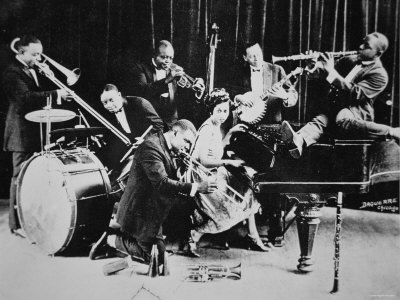
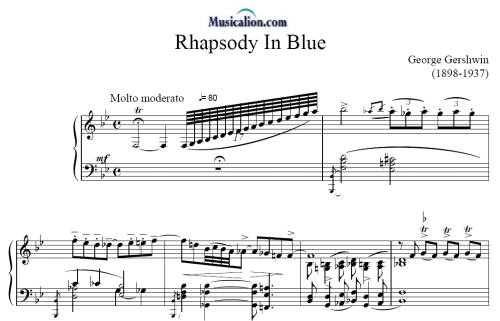
In Gershwin’s Rhapsody in Blue, the score Is written for a full symphony orchestra; however, there is also a solo piano version of this piece. The instruments include a full symphony orchestra; solo piano, 2 flutes, 2 clarinets, 2 oboes, bass clarinet, 2 bassoons, 2 alto saxophones, tenor saxophone, 3 French horns, 3 trumpets, tuba, timpani, bass drum, snare drum, cymbals, gong, triangle, 1st violins, 2nd violins, violas, cellos, and double basses. Below is the form of the piece:
1.Exposition
-Introduction which states and develops many of the work's major themes
-Episode 1, which introduces a new theme
-Return of opening theme
2. Blues-y march and development
3. Return of opening theme
4. Broad tune and development
5. Cadenza
6. Quasi-recap
7. Finale.
Melody
Classical melodies are among the most tuneful and easy to remember. However, they are not easy to sing. The themes of even highly sophisticated compositions may have a folk or popular flavor. Occasionally, composer simply borrowed popular tunes, but more often, they wrote original themes with a popular character. Classical melodies often sound balanced and symmetrical because they are frequently made up of two phrases of the same length. The second phrase, in such melodies, may begin like the first, but it will end more conclusively and it will be easier to sing.